What building a woodblock print with AI taught me about the part of the work that does not delegate.
NoteJuly 24, 2026
I asked an AI for a Japanese woodblock print of a mountain landscape. It gave me something technically correct and completely wrong. My whole review was one sentence: “This landed more lines than art.”
That sentence turned out to be the most useful thing I said all week, and not because it fixed the image. It’s the clearest example I have of where AI ends and where the human job begins.
I’m building this site, and I wanted original art for it. Woodblock inspired. Calm, layered, hand-carved feeling. The kind of thing you’d frame.
The first attempt came back fast: a hand-coded SVG landscape. Four mountain ranges in a nice blue ramp. Mist bands. A little rust sun. Birds. It satisfied every single requirement I’d written down.

And it had no soul. Rolling hills that could have shipped on any startup’s landing page. Every box checked, nothing carved. The machine had done the workload, and the workload was not the point.
That’s the first lesson, and the speed is what makes it easy to miss. A met spec is not taste. AI will carry enormous workloads without complaint. It wrote the code, placed the layers, matched the palette, and did it in seconds. What it could not do was know that the result was wrong.
So I said so. The critique went back with sharper vocabulary: carved edges, not smooth curves. Ink outlines with the color printed slightly off-register, the way real blocks misalign. Gradation like a brush charged unevenly with ink. Stepped cloud bars instead of soft mist.
A second model, from a different vendor, took the next swing. This is a real thing we do now: one AI drafts, another revises, and I referee. Round two came back genuinely better. Angular peaks. Keylines. A sun tucked behind the mountain’s shoulder.
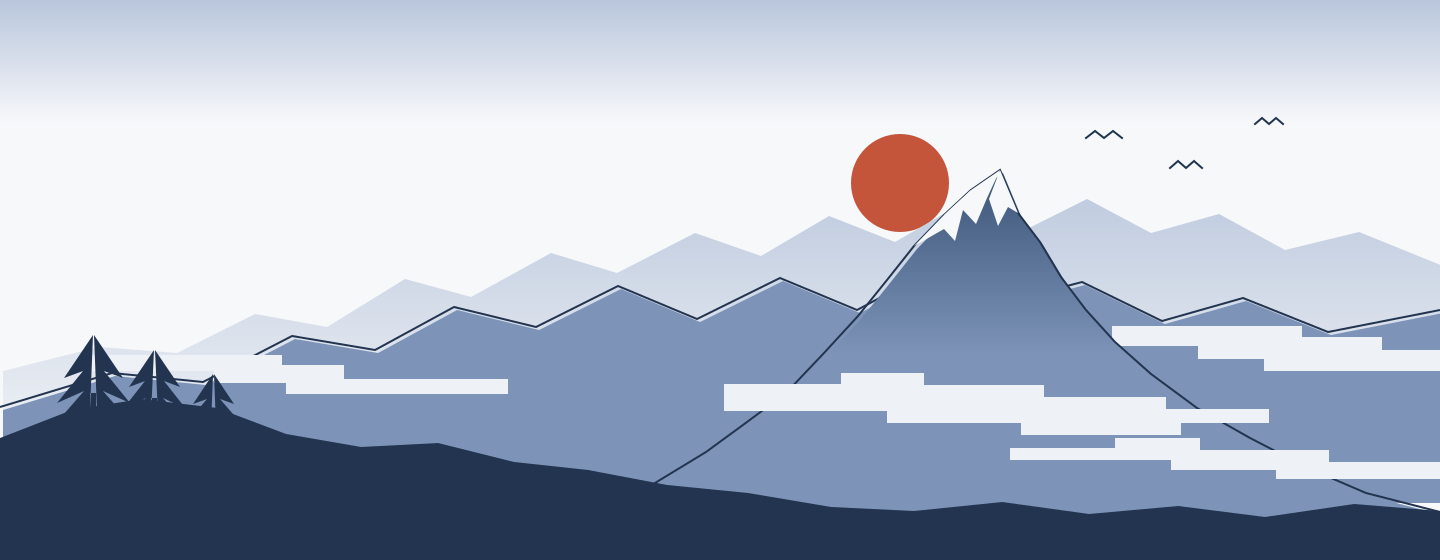
Still not right. Closer, but it looked like a diagram of a woodblock print, not a print.
Here’s what mattered though: each round took minutes. A human illustrator working at this fidelity needs days per round, and every round costs money and goodwill. I burned through three full concepts before lunch and lost nothing but the time it took to look at them. That’s the second lesson. The first draft was never the gift. The cheap tenth draft is. Iteration speed changes what you’re willing to try.
A better prompt was never going to fix it. The role had to change.
I stopped commissioning artwork and built a print shop instead. I wrote a reusable style library. Five colors, fixed: warm paper, misty blue-gray, slate, deep ink navy, one burnt-rust accent. Composition rules for where the subject sits and where the negative space stays open for text. Material constraints, down to visible gouge marks and uneven ink density. Then a list of anti-goals, which mattered more than the rest of it put together: no gradients, no clip art, no decorative cliches, no faux-vintage grunge.
Then I generated, culled, and regenerated. Not one image. A system for producing images in one consistent hand.
The Big Bend print came out of that system.
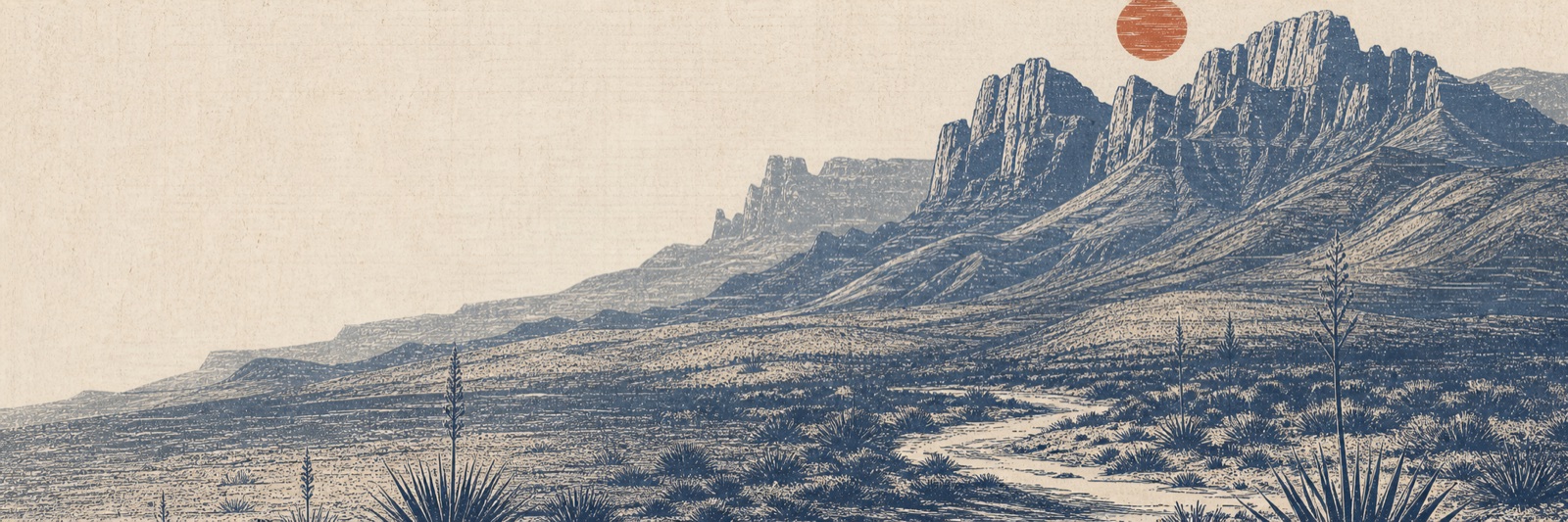
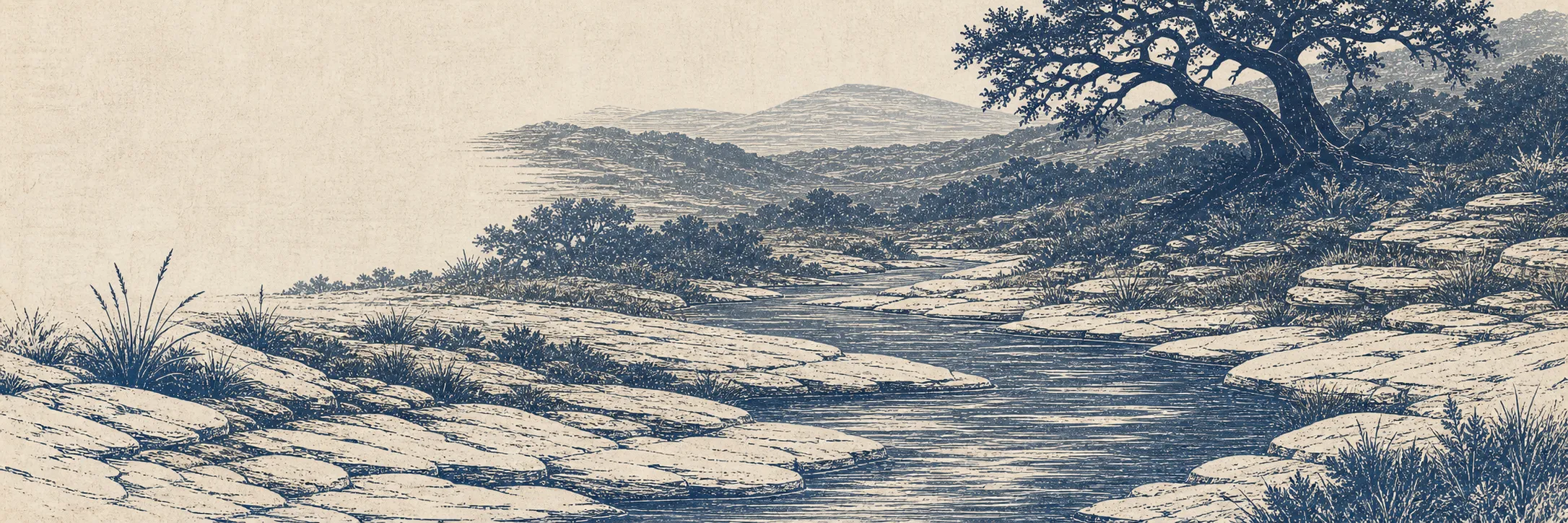
And because it was a system and not a lucky output, three more Texas landscapes followed in the same hand: a cypress bayou in East Texas, a limestone creek in the Hill Country, a mountain range for the front page. A coordinated series. They’re all on this site now.
Look at what actually happened across those rounds. The machine produced everything. It never decided anything.
It never knew the hills were wrong. It never preferred Big Bend over a generic mountain. It never chose Texas as the subject, and it never would have, because Texas isn’t in the spec. Texas is in me.
Every “no,” every “closer,” and the final “that’s the one” came from a person. Not because the models are weak. They’re astonishing. But deciding is not production. Deciding is knowing what the thing is for, and what it’s for lives with whoever owns the outcome.
AI can partner. It cannot decide. When people tell me they tried AI and got generic results, this is almost always what happened: they delegated the judgment along with the workload, and judgment doesn’t delegate.
I don’t run an art studio. I run company operations, and I run them on AI: in one recent six-week stretch, ninety-one production deliverables shipped through a system I built, every one verified live. The pattern there is identical to the print. The machines carry the workload and iterate fast. Every deliverable passes a human gate before it counts. Anything outbound is drafted by the system and sent by a person.
Judgment is becoming the scarce input. The organizations that get real results from AI won’t be the ones with the best prompts. They’ll be the ones who worked out where a person belongs in the loop and put one there on purpose.
The machine carved the block a hundred times. Knowing which print to hang was never its job.